
Guatemala's Extraordinary Holy Week Events
- Scott Leitch

- Jan 19, 2022
- 4 min read
Astonishing Street Carpets in Antigua
Extraordinary street carpets that line the procession paths are Central America’s most famous and cherished Holy Week tradition. Walking the streets at dawn on Good Friday is like walking into a gallery of spectacular works of art. Make sure to treasure them, as they will soon be destroyed as the procession passes through.

Introduced by the Spanish in the 16th century, the Andalusian rooted procession celebrating Easter is the largest in the world in Antigua, Guatemala. The entire city of Antigua participates in the Easter Festival (Semana Santa) Holy Week events, while thousands of travelers come to share in the experience.
Although Holy Week stems from a very religious background, one does not have to be a Catholic to appreciate the excitement and energy of Antigua’s celebrations. A very unique element of Antigua’s celebrations, and perhaps a crucial part of Antigua’s popularity for Holy Week is the Mayan component and the fusion of these distinct cultures. Antigua offers to the world an impressive facet to the Easter celebrations, their alfombras. Alfombra means carpet in Arabic.

Antigua residents begin work, sometimes months in advance, for the Holy Week alfombras. These intricately designed carpets are created from sand, colored sawdust, flowers and plants to be given as a sacrificial offering. First, sand is spread across Antigua’s famous cobblestone streets to level the roads, the colored sawdust and decorative flowers and plants are then placed to create vivid scenes from nature, Mayan tradition, and biblical events.

As Antigua rolls out the carpet for the Holy Week processions, visitors can enjoy the vivid colors and aromas throughout the streets of Antigua, while street vendors offer traditional foods and beautiful flowers for sale. When the procession come down the streets the carpets are destroyed and visitors will need to wait until the next year to enjoy this unique tradition again.
Holy Thursday in Totonicapán
Experience Easter week like never before. Maundy Thursday commemorates the Last Supper of Jesus Christ, on the night of his betrayal. In Totonicapán, the traditional reenactment of the "Act of the Jews" has been passed down for several generations and is truly a must-see spectacle.

Totonicapán's historic tradition of celebrating Maundy Thursday, the Christian holy day falling on the Thursday before Easter, commemorates the Last Supper of Jesus Christ, on the night of his betrayal. Holy Thursday in Totonicapán is full of religious and cultural activities and highlights the celebration of the Act of the Jews (“Acto de los Judios”). This traditional theatrical act is done by inexperienced locals, who devote weeks to rehearsing and making their costumes, for this decades-old tradition.
Via Crucis at Chiantla, Huehuetenango
Hundreds of people come to Chiantla on Good Friday (Viernes Santo) to witness the townspeople begin their performance that they've been practicing for months. Known to many as "The Passion of Christ", Via Crucis (the Way of the Cross) is a dramatization of the Son of God's journey to death.

This specially selected group from the community act out the performance of Jesus Christ being taken in front of Pontius Pilate (Poncio Pilatos) then to Herod, to finally receive his death sentence and charged with bearing the cross together with the two thieves. Before bearing the cross, Jesus is whipped, and a crown of thorns is placed on his head, he then begins his walk through the streets of Chiantla.
Maximon Parade at Santiago Atitlan
Santiago Atitlán is famous for the neighborhood house where the deity Maximón resides and is an excellent example of the Guatemalan syncretism. The Cofrades, or brotherhood, of Santiago Atitlan take Maximon in a parade of “Santo Entierro” (Holy Burial) on Good Friday.
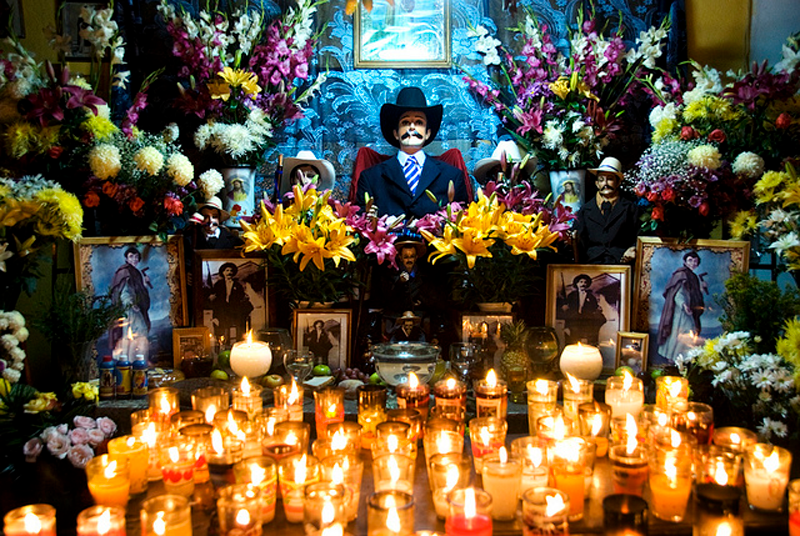
Guatemala is well known for its colorful processions during Cuaresma, or the season of Lent, which leads up to Easter Sunday. People from near and far journey to Antigua and Guatemala City to witness the special processions and events on holy days and the famed brightly colored street carpet designs, as well as the extraordinary demonstrations of piety on Good Friday.
But the most extraordinary of these Guatemalan religious celebrations is discovered in Santiago Atitlán, an indigenous town on the shoreline of the crater-lake, Lago de Atitlán. Cradled between three looming volcanoes, sits a Catholic Church, which dates back to the 1500’s. Here, Holy Week celebrates a remarkable demonstration of the distinctive balance of Mayan and Catholic religious traditions recognized as syncretism, a blend of differing religions, cultures, and traditions.

The Cofrades , or brotherhood, of Santiago Atitlan take Maximon in a parade of “Santo Entierro” (Holy Burial) on Good Friday. To complete the parade, the cofrades dress him with the best quality clothing.
The week’s events:
Holy Monday – the Cofrades Purify the clothes of Maximon
Holy Tuesday – the Cofrades dress him in private
Holy Wednesday – Maximon is taken to the Chapel at la Plaza Mayor
Holy Thursday – Maximon is tied to a flagpole
Good Friday – Maximon is paraded in the streets and redressed
Click Here to find out more about Guatemala's Extraordinary Events!
#Syncretism #GuatemalaEvents #GuatemalaVacation #maximon #Santiago #AntiguaGuatemala #adventuretraveler #LakeAtitlán #MayanCivilization #AntiguaTradition #GuatemalaTrip #AdventureTravel #GuatemalaCulture #traveldestination #CentralAmericaTravel #Antigua #GuatemalaTour #Easter #Mayan #travel #HolyWeek #GuatemalaTradition #GuatemalaTravel #CentralAmerica #Guatemala



Comments