

ARCHAEOLOGICAL
Sites
Guatemala may be a small Central American country, but it is rich with culture, history, and tradition. The country is home to a vast collection of Mayan and pre-Mayan cities and archaeological artifacts. While most known for being home to the city of Tikal, there are many other lesser-known sites. These sites, although less familiar host an abundance of treasures from America's first inhabitants. We offer several pre-designed tours of these very special destinations, or we can create a tailor-made experience that personalizes your trip to your dreams!
Tropical Rainforest Exploration
*It is recommended to stay in Guatemala City for one night after arriving in the country. The following morning you will fly to Petén. Transportation is provided from the airport to your hotel in Guatemala City.
Tikal is the largest excavated site in the American continent and contains some of the most fascinating archaeological remains of the ancient Maya civilization. Explore the hidden beauty of Maya cities dating back to 400 B.C. Explore the Maya ruins at the North Acropolis, stunning ancient roads, and an unrivaled view of the Yaxhá lagoons and jungle. Complete your tour in Uaxactún. Uaxactún is located 23km north of Tikal, and is one of the oldest Maya cities in Guatemala. Uaxactún is notable for its astronomical observatory, and is thought to be the place where Mayans began developing their calendar.
**To learn more about Tikal and take a virtual tour of the Tikal National Park Click Here.**

Day 1 − The Northern Department of Petén Itinerary:
Petén makes up approximately one third of the country, yet its population represents only about 4%. Tikal is the largest excavated site in the American continent and contains some of the most fascinating archaeological remains of the ancient Maya civilization. Explore the hidden beauty of Maya cities dating back to 400 B.C.
04:30a.m. Transfer from your hotel to airport
06:00a.m. Fly to Flores, Petén
07:00a.m. Arrive to Flores, Petén
07:30a.m. Transfer to National Park
Tikal at your hotel
08:30a.m. Arrive to hotel Jaguar Inn
09:00a.m. Tour at National Park Tikal
02:00p.m. Lunch at hotel
Free Afternoon
Day 2 − Yaxha and Topoxte, The Mayan World Itinerary:
Travel to Yaxha to see the Maya ruins at the North Acropolis, stunning ancient roads, and an unrivaled view of the Yaxhá lagoons and jungle. This area is rich with wildlife. After lunch, you will take a boat across the lagoon to Topoxte. The structures here date to the Preclassic period. The most valuable is Temple Pyramid C, which is the last remaining Postclassic structure in Petén.
04:00a.m. Transfer to Yaxhá
05:00a.m. Sunrise Tour at Yaxhá
06:30a.m. Breakfast in the wilderness
12:30p.m. Lunch at Yaxhá
01:30p.m. Boat to Topoxté
04:00p.m. Boat to Yaxhá Hotel
Day 3 − Uaxactún Itinerary:
Uaxactún is located 23km north of Tikal. Uaxactún, one of the oldest Maya cities in Guatemala. Uaxactún is notable for its astronomical observatory, and is thought to be the place where Mayans began developing their calendar.
09:00a.m. Transfer to Uaxactún
12:30p.m. Lunch with a local family
01:30p.m. Transfer to Flores airport
06:30p.m. Fly to Guatemala
07:30p.m. Arrive to Guatemala
Transportation will be provided to your hotel.
Suggested logging: Westing Camino Real


Three amazing days of exploration
3 DAYS OF EXPLORATION
3 2
DAYS NIGHTS
$1,005
2 PERSON ITINERARY
Book this Tour Online
Yaxha and Topoxte, The Mayan World
Although these sites are not as popular as “Tikal” or “Mirador”, they were still very powerful in their time and very beautiful. Yaxhá is located over a hill surrounded by the Sacnab and Yaxhá lagoons. It is inside a zone of two square kilometers, where more than 1700 structures have been identified (Hermes, et al., 1999). The site was inhabited by the Maya civilization since the Pre-classic period (1500 B.C. – 250 A.C.) through the Classic period (250-950 A.C.). After lunch, you will take a boat to Topoxte, which was named by Teobert Maler in 1904, this name means "seed of the Ramón tree". The Ramón tree, commonly known as breadnut, was an important component of the ancient Maya diet.
Yaxha and Topoxte, The Mayan World Itinerary:
Travel to Yaxha to see the Maya ruins at the North Acropolis, stunning ancient roads, and an unrivaled view of the Yaxhá lagoons and jungle. This area is rich with wildlife. After lunch, you will take a boat across the lagoon to Topoxte. The structures here date to the Preclassic period. The most valuable is Temple Pyramid C, which is the last remaining Postclassic structure in Petén.
04:00a.m. Transfer to Yaxhá
05:00a.m. Sunrise Tour at Yaxhá
06:30a.m. Breakfast in the wilderness
12:30p.m. Lunch at Yaxhá
01:30p.m. Boat to Topoxté
04:00p.m. Boat to Yaxhá Hotel


Journey into the heart of the Mayan World
1 DAY EXPEDITION
1
DAY TOUR
$210
2 PERSON ITINERARY
Book this Tour Online
Lake Atitlan and Ixim'che
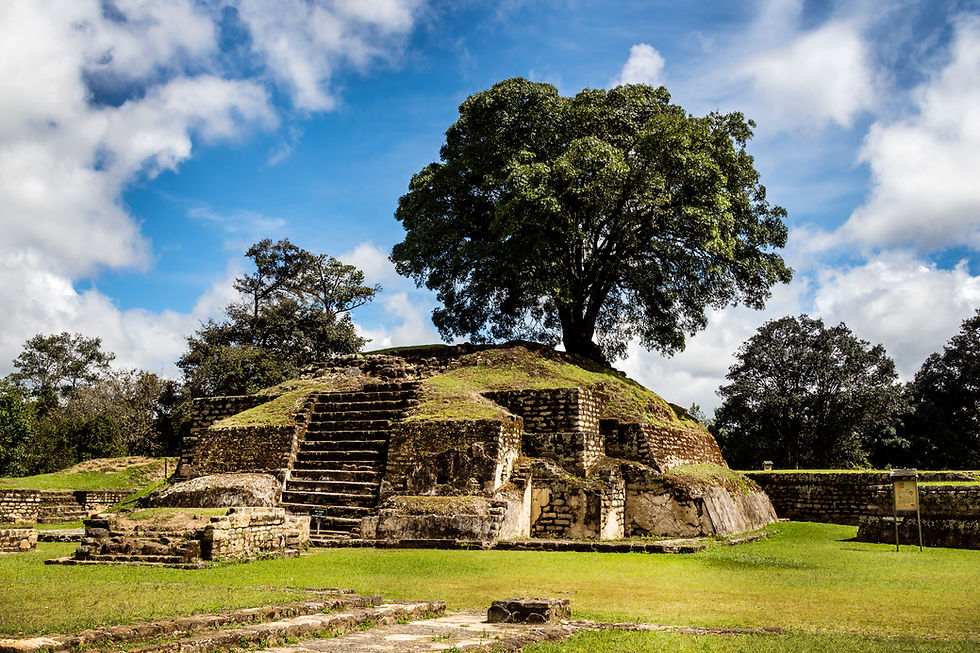
Ixim’che is one of the Post Classic cities from the Maya Civilization. The “K’aqchik’el” mayan group founded it in approximately 1463. Ixim’che is the best way to start getting involved in the Mayan Cosmic and Spiritual Vision.
Lake Atitlan and Ixim'che Itinerary:
Iximché is the closest Mayan ruin to Lake Atitlan. These well preserved ruins include pyramid-temples, ball-courts, royal palaces, museum, and interpretive signs explaining the history of the site.
09:00a.m. Transfer to Ixim’che from Antigua, Guatemala
11:00a.m. Tour at Ixim’che
12:30p.m. Transfer to lunch place
01:00p.m. Lunch on the road
02:00p.m. Transfer to Lake Atitlan
03:00p.m. Drop off at your hotel at Lake Atitlan

Discover the Mayas from past and present
1 DAY EXCURSION
1
DAY TOUR
$185
2 PERSON ITINERARY
Book this Tour Online
The Northern Department of Petén
Petén occupies approximately a third of the country, yet its population represents only about 4%. This huge expanse of tropical rainforest, swamps and savannah forms part of an untamed wilderness that stretches into the Lacandón forest and collects Maya cities from late pre-classic and classic period (400b.c. to 900a.d).
Tikal: The national park of Tikal is a protected area about 576 square kilometers, on the edge of the large “Reserva de la Biósfera Maya”. Animal species that can be found include the howler and spider monkeys and toucans and parakeets. Exploring Tikal will help you discover the Mayan spiritual and universe vision.
For the most memorable experience, ask about our Sunrise Tour!

The Northern Department of Petén Itinerary
Option 1: DAY 1 − GUATEMALA CITY AIRPORT DEPARTURE:
04:30a.m. Transfer from your hotel in
Guatemala City to Guatemala City airport.
06:00a.m. Fly to Flores, Petén
07:00a.m. Arrive to Flores, Petén
07:30a.m. Transfer to Tikal National Park
09:00a.m. Begin your tour of Tikal
02:00p.m. Lunch
03:00p.m. Transfer to Flores
04:30p.m. Panoramic Tour of Flores
05:30p.m. Drop off at Flores Airport
06:30p.m. Fly Back to Guatemala City
08:00p.m. Transfer to Hotel in Guatemala City

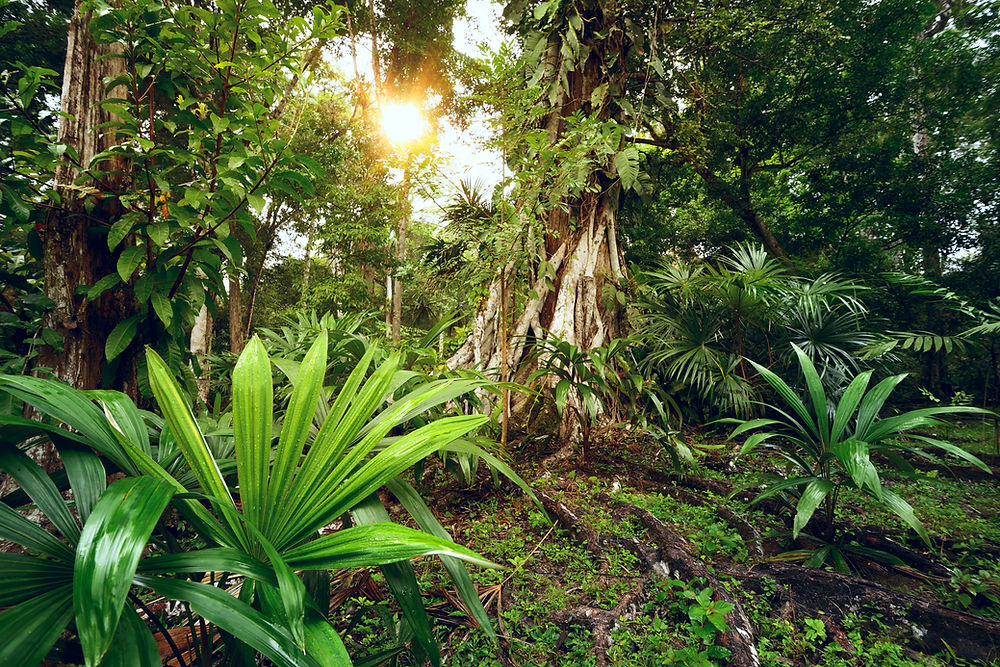
Departure from hotel within Tikal National Park
Departure from Guatemala City (domestic flight included)
2 DEPARTURE LOCATIONS
1
DAY TOUR
$185
2 PERSON ITINERARY
Book this Tour Online
$535
2 PERSON ITINERARY
1
DAY TOUR
Other Must-See Archaeological Sites
Guatemala is a top destination where you can find tons of amazing Mayan archaeological sites. Although Guatemala is most known for being home to the great city of Tikal, the country is also full of many other locations that hold rich history and astonishing ruins. The country's neighbors, Honduras and Mexico, also host many important relics from the Mayan Civilization. Popular additions to tours, many times, include one or more of these must-see sites.

El Mirador is a large pre-Columbian Mayan settlement hidden in the jungle in the modern department of Petén, which can only be accessed by a 3-day walk or helicopter. 30 minutes flying over the Petén jungle for the extraordinary site of El Mirador with a series of "triadic" structures, consisting of large artificial platforms crowned with a set of 3 pyramids at the top.

Tak'alik Ab'aj is a pre-Columbian archaeological site in Guatemala. It was formerly known as Abaj Takalik; its ancient name may have been Kooja. It is one of several Mesoamerican sites with both Olmec and Maya features.

Quiriguá is an ancient Maya archeological site in the department of Izabal in south-eastern Guatemala. It is a medium-sized site of Mayan ruins, covering approximately 3 square kilometers along the lower Motagua River. During the Maya Classic Period, Quiriguá was in a crucial location as it was situated in the junction of several important trade routes. Quiriguá shares its architectural and sculptural styles with the nearby Classic Period city of Copán, with whose history it is closely entwined.

Discover Samabaj, Guatemala’s Atlantis! Deep beneath Lake Atitlán’s surface, lies a majestic city of the Pre-Classic Mayan Civilization from over 2,000 years ago. Our exclusive access to the city allows you to experience Mayan ruins like never before. Witness the island city that was used as a religious pilgrimage for the Maya before it was covered with over 50 feet of water.
Located in the department of Copán, in western Honduras, the archaeological site of Copán is known to be one of the great centers of Mayan civilization for more than a thousand years. The magnificent ruins have some of the most remarkable pre-Columbian art found anywhere. Copán Ruins are a major tourist attraction for western Honduras, but less popular than places like Chichén Itzá, which have made the visit to Copán more attractive to many travelers interested in the Mayan Civilization.

San Bartolo is a small pre-Columbian Mayan archaeological area situated in the Department of Petén, located northeast of Tikal approximately fifty miles from the closest settlement. San Bartolo gets its fame from its impressive late Pre-classic mural paintings that are heavily influenced by the Olmec tradition and also from early examples of unexplained Mayan script.This Mayan site boasts an 85-foot pyramid named "Las Ventanas", or The Windows, & the Temple of "Las Pinturas", or The Paintings.

The Olmec colossal heads are stone representations of human heads sculpted from large basalt boulders. The heads date from at least 900 BC and are a distinctive feature of the Olmec civilization of ancient Mesoamerica. All portray mature individuals with fleshy cheeks, flat noses, and slightly crossed eyes; their physical characteristics correspond to a type that is still common among the inhabitants of Tabasco and Veracruz.

Deep in the jungle, 4X4 vehicles are needed to reach San Clemente, a small pre-Columbian Mayan archaeological area situated in the Department of Petén. Much less known than the sites of Tikal and Uaxactun, visitors have a unique opportunity to see excavation work in progress on the Mayan ruins in this area.
